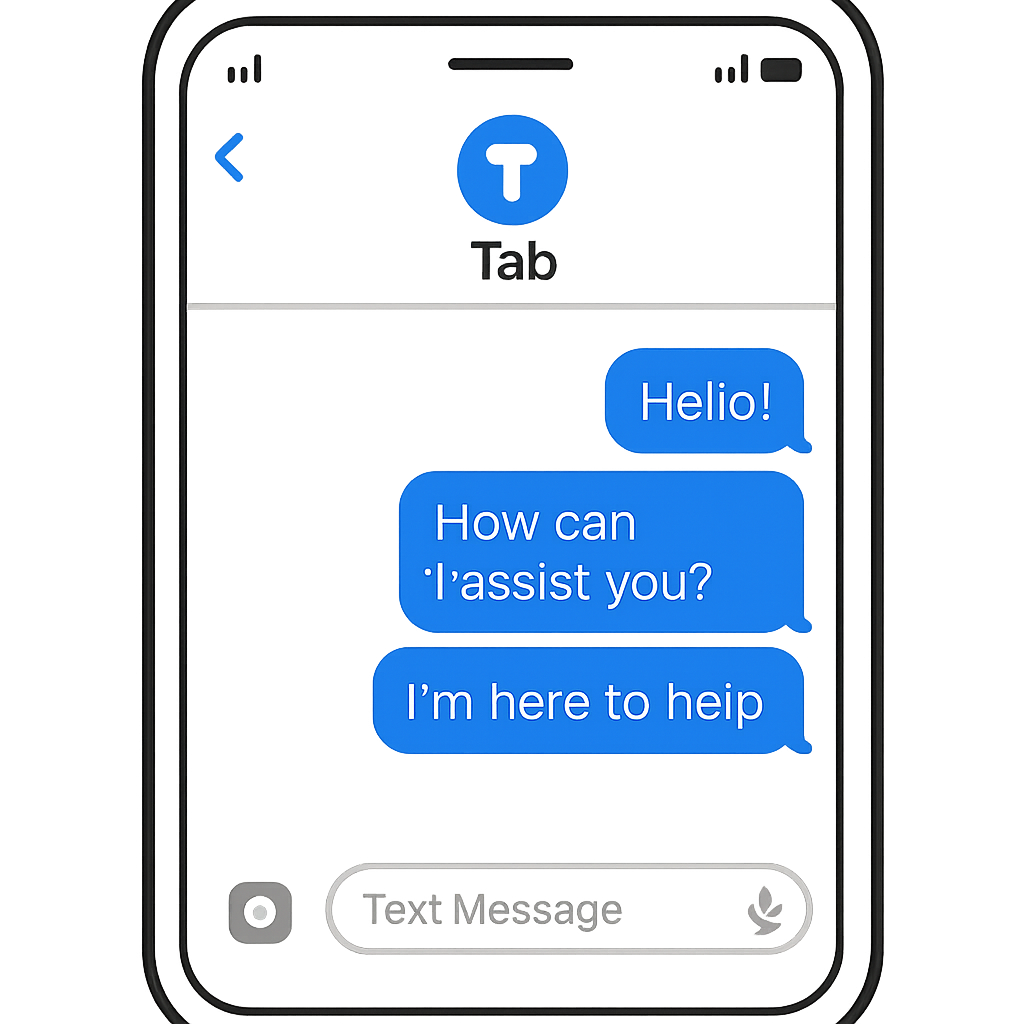
A new entrant has joined the consumer AI assistant arena: Tab, which just came out of stealth mode with a valuation of $300 million. The startup, co-founded by Brennan Erbz, Stafford Schlitt, and Ammar Amdani, aims to be more than just another chatbot—it wants to handle errands, bookings, and everyday tasks through natural conversation on platforms like iMessage and WhatsApp.
How Tab Works and What Sets It Apart
Tab operates like texting someone you trust. Whether you need help ordering groceries, booking travel, finding gifts, or managing bills, you just send Tab a message. It then takes care of the task—not by telling you what to do, but by doing it for you. The assistant even has its own phone number, device access, and wallet, so it can directly act on your requests. Every action that could have consequences requires your permission first.
On the trust front, Tab emphasizes privacy and user control. User data is not used to train AI models. Financial information like your card details is stored in an encrypted vault that Tab itself can’t access. Critical tasks—booking, buying, calling—won’t happen without your explicit approval. According to Tab’s leadership, in an era where everyone’s aiming to make AI more capable, trust isn’t optional—it’s essential.
Market Position, Fundraising & Strategy
Tab’s $300 million valuation reflects strong investor interest even though the startup has not disclosed full funding details. Key backers include SV Angel, Valar Ventures, and American Spirit. For now, Tab’s growth has been largely organic, relying on word-of-mouth instead of major marketing campaigns. The company says it has more product developments in the pipeline.
It’s entering a space that’s heating up fast. Other consumer AI assistants like Instinct and Meta’s Muse are gaining attention for similar goals—helping users offload tasks and manage daily routines. But where many are chasing flashy demos, Tab bets that success will go to services that earn user trust and respect privacy first.
Tab believes the AI assistants that truly win won’t be the ones with the most impressive demos—they’ll be the ones whose users believe in their discretion, security, and reliability. The company frames its value proposition around being the kind of helpful, personalized assistant people used to get from trusted family figures—or professionals like a family doctor—reinvented for the digital age.
What this means: Trust is quickly becoming the battleground in consumer AI. Tab doesn’t just promise to be capable—it’s building around privacy-first design and user agency. As more AI assistants flood the market, those committed to transparency and control could emerge as the real winners. Keep an eye on how Tab handles scale, feature rollouts, and, importantly, maintaining its no-data-for-training stance as usage grows.